
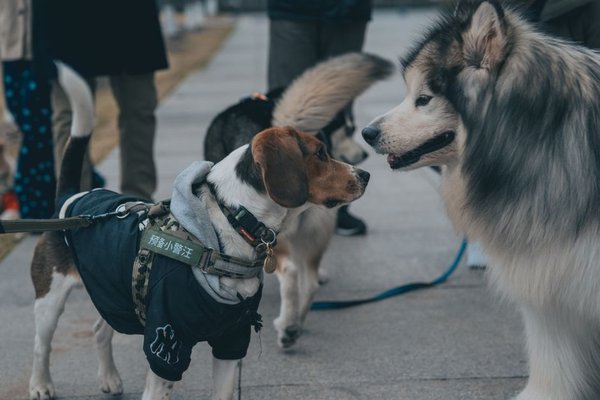
Socializing a reactive dog is not about collecting as many greetings as possible. For a dog who barks, lunges, freezes, hides, or struggles to recover around people or other dogs, forced interaction can make the problem worse. The safer goal is emotional neutrality: your dog notices a trigger, remains able to think, and learns that they can stay at a comfortable distance without anything bad happening.
Rescue and shelter dogs may have unknown histories, and reactions can come from fear, frustration, pain, or feeling trapped. Measure success by recovery, choice, and calm behaviour rather than closeness.
Identify the Exact Triggers
Before beginning dog reactivity training, define the trigger precisely. Your dog might cope with calm dogs across a wide road but react to fast-moving dogs, direct staring, fence barking, or head-on approaches. A person-reactive dog may tolerate seated adults yet fear children, hats, umbrellas, or visitors entering the home.
Keep a trigger diary recording distance, location, body language, and recovery time. If reactivity appeared suddenly, has intensified, or includes snapping or biting, arrange a veterinary check. Pain can affect behaviour, and a qualified professional can help build a safe plan.
Find Your Dog’s Working Distance
Your dog’s threshold is the point at which stress becomes too high for useful learning. Below threshold, they can notice the trigger and still eat, sniff, respond to you, or turn away. Near threshold, you may see a closed mouth, stiff posture, hard staring, rapid panting, whining, or difficulty taking food. Over threshold, barking, lunging, freezing, or escape attempts become more likely.
Distance is your most useful tool. If your dog cannot take a familiar treat or disengage, move farther away rather than asking for more obedience. Crossing the street, turning down a side road, or stepping behind a parked car is not failure. It prevents rehearsal of leash reactivity and creates space for learning.
Our guide to understanding dog body language is a useful companion topic because subtle warning signs usually appear before the dramatic reaction.
Teach Safety Skills Away From Triggers
Practise easy behaviours in quiet places. A cheerful U-turn helps you leave quickly, a hand target guides without pulling, and a “find it” cue with scattered treats redirects attention. Rehearse at home and on calm streets first.
Use secure, well-fitted equipment. Many reactive dogs do well with a comfortable harness and standard lead that provides control without constant tension. Dogs with a bite history may also benefit from positive basket-muzzle training. A muzzle is a safety tool, not a substitute for distance or behaviour work.
Change What the Trigger Predicts
At a workable distance, pair the appearance of the trigger with something your dog values. Your dog sees the person or dog, you calmly provide high-value food, and the food stops when the trigger is gone. With repetition, the trigger can begin to predict good outcomes rather than pressure or conflict.
Imagine a rescue dog who reacts when another dog is within 15 metres. Begin in an open area where a calm helper dog remains about 25 metres away. When your dog notices the helper, say “yes” and feed several small treats. Then turn and walk away for a sniffing break. If your dog can look at the helper and then back at you with a loose body, the session is productive. If staring intensifies or food is refused, increase the distance.
Do not reduce distance every session. Fearful dog socialization should move at the dog’s pace. Poor sleep, previous excitement, or a busy environment can reduce what your dog can handle that day. Returning to an easier setup protects confidence.
Prefer Parallel Experiences to Forced Greetings
Many reactive dogs learn more from being near others without interacting. Try parallel walking with a calm dog: start far apart, move in the same direction, and include curved paths and sniffing breaks instead of face-to-face staring.
There is no requirement for the dogs to meet. A successful session may end with both dogs calmly walking 10 metres apart. Neutral coexistence is a valuable social skill and, for some dogs, a better goal than off-lead play. Our loose-lead walking guide and calm enrichment ideas can also support focus.
Introduce People With Choice
Ask unfamiliar people to ignore your dog at first. They should avoid leaning over, staring, reaching out, or luring the dog closer. Let the dog observe from a comfortable distance and choose whether to approach. A helper can toss treats away from their body, allowing the dog to retreat after eating instead of feeling drawn into contact.
For visitors at home, use a gate, separate room, or safe resting area before opening the door. Give your dog time to settle while the visitor sits quietly. Some dogs eventually choose to investigate; others are happier remaining separate. Social success does not require petting.
Avoid Fear, Punishment, and Flooding
Leash corrections, shouting, prong collars, shock collars, and forced exposure can add fear without changing the emotion behind the behaviour. A dog that stops growling may still be afraid but has lost an important warning signal. Reward-based methods focus instead on changing associations and teaching safer responses.
Avoid crowded dog parks, busy pet shops, and repeated close passes in the hope that your dog will “get used to it.” Overexposure can increase sensitivity. Short, controlled sessions followed by rest are usually more productive.
Measure Progress Beyond Barking
Useful signs of improvement include recovering faster, accepting food at a slightly closer distance, choosing to turn away, keeping a softer body, or checking in with you. Progress is rarely linear, so compare trends across several weeks rather than judging one difficult walk.
Management remains part of the plan. Quiet routes, visual barriers, extra space, and clear communication protect your progress. The goal is a safer, less stressful daily life, not proving that your dog can tolerate everything.
Frequently Asked Questions
Can a reactive dog ever be fully socialized?
Many reactive dogs improve substantially, but outcomes vary. Some become comfortable around previous triggers, while others continue to need distance and thoughtful management. Focus on welfare and quality of life rather than a guaranteed cure.
Should a reactive dog greet other dogs on a lead?
Planned distance work is usually safer than on-lead greetings, especially when the dog feels trapped or frustrated. A qualified professional can assess whether direct greetings are appropriate.
How long does fearful dog socialization take?
There is no fixed timeline. Progress depends on the cause, severity, health, environment, learning history, and consistency of training. Think in months rather than days and keep sessions short enough for success.
When should I seek professional help?
Seek help if there has been a bite, reactions are escalating, you cannot maintain safe distance, or your dog struggles to recover. Start with your veterinarian, then choose a qualified behaviourist who uses reward-based methods.
Give Your Dog Space to Learn
Learning how to socialize a reactive dog safely means replacing pressure with choice, distance, and carefully planned positive experiences. You do not need to rush towards greetings or busy environments. When your dog can notice the world, remain under threshold, and trust that you will help them move away, genuine confidence has room to grow.