
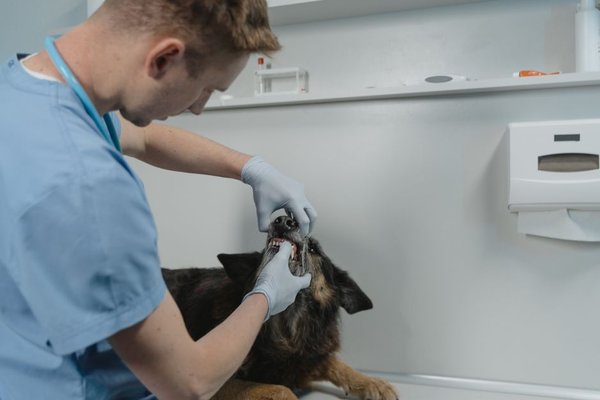
Dental care is a major part of preventive dog health. A dog can keep eating and playing while painful disease develops below the gumline. The best approach is a home routine that limits plaque between veterinary examinations. Done consistently, dog dental care at home can improve comfort, reduce bad breath, and help you notice problems early.
Why home dental care matters
Plaque is a soft bacterial film that begins collecting on teeth soon after eating. If it is not disrupted, it can harden into tartar, also called calculus. Tartar is the yellow or brown material owners often notice, but more serious damage may be hidden where bacteria and inflammation affect the gums, ligaments, and bone supporting each tooth.
Home care helps control new plaque, but it cannot diagnose disease below the gumline or remove established tartar safely. Veterinary oral examinations remain essential, and some dogs will need professional cleaning, dental X-rays, and treatment under anaesthesia.
Start with a quick mouth check
Before beginning dog teeth brushing, look at your dog’s mouth in good light without forcing it open. Healthy gums are generally pink, although normal pigmentation varies. Check for heavy tartar, redness, bleeding, broken or loose teeth, swelling, and unusually strong odour.
Book a veterinary examination before brushing if the gums are inflamed, your dog appears painful, or substantial tartar is present. Scrubbing sore tissue can make brushing frightening and worsen discomfort. Seek prompt care for facial swelling, persistent bleeding, difficulty eating, sudden refusal of hard food, or a damaged tooth.
How to brush your dog’s teeth calmly
Choose dog-safe equipment
Use a soft pet toothbrush, a small soft-bristled toothbrush, or a finger brush if your veterinarian recommends one. Pair it with toothpaste made specifically for dogs. Human toothpaste is not designed to be swallowed and may contain ingredients unsafe for pets, so never use it.
Build acceptance in small steps
Many brushing routines fail because they move too quickly. For the first few sessions, touch your dog’s cheek and lift the lip for a second, then reward calm behaviour. Next, let the dog taste pet toothpaste. Progress to rubbing a finger or damp gauze along the outer tooth surfaces before introducing the brush.
For example, a dog that backs away from the toothbrush may tolerate three seconds of lip lifting after an evening walk. Repeat that easy step for several days, then brush two canine teeth, reward, and stop. Adding a few teeth at a time works better than attempting the whole mouth during one stressful session.
Use a gentle technique
Lift the lip and angle the bristles toward the gumline. Use small circular or back-and-forth motions on the outer surfaces, where plaque commonly accumulates. You do not need to force the mouth wide open. Focus first on the large cheek teeth and canine teeth, then gradually cover more areas.
Aim for daily brushing because plaque reforms quickly. If that is not yet realistic, establish a schedule several times a week and work toward daily sessions. Keep each session brief and predictable. Brushing should not cause significant bleeding or pain.
What brushing cannot do
Brushing removes soft plaque rather than hardened tartar. Once thick calculus is attached to the teeth, scraping it at home is unsafe and does not address disease beneath the gums. Sharp tools can injure the enamel, gums, or a moving dog.
Home care also does not replace veterinary dentistry. A professional procedure allows the veterinary team to examine each tooth, clean above and below the gumline, take dental radiographs when indicated, and treat painful problems. Cosmetic, anaesthesia-free scaling of visible surfaces cannot provide the same assessment or subgingival cleaning.
Using dental chews and other products wisely
Dental chews for dogs can support brushing, especially for teeth that are difficult to reach, but they are a supplement rather than a substitute. Look for products carrying the Veterinary Oral Health Council seal, which indicates that evidence supporting plaque or tartar control has been reviewed.
Select the correct size and supervise chewing. A chew should not be small enough to swallow whole, and its calories should count toward the dog’s daily intake. Stop using it if problems occur.
Avoid extremely hard items such as antlers, hooves, hard bones, and objects that do not flex, because they can contribute to fractured teeth. Your veterinarian may also suggest a dental diet, water additive, oral gel, or wipe based on your dog’s health and willingness to accept brushing. Owners comparing products may also find a guide to safe dental chews for dogs useful.
Signs of dog gum disease
Foul breath should not be dismissed as normal. Early dog gum disease may also cause a red line along the gums, mild bleeding, or increased tartar. As disease progresses, a dog may drool, chew on one side, drop food, avoid toys, paw at the mouth, resist face touching, or become less enthusiastic about meals.
Loose teeth, receding gums, pus, facial swelling, or an opening below the eye can indicate advanced disease or infection. Behavioural changes matter too. A dog with oral pain may seem quieter or irritable without showing an obvious dental symptom. Reviewing the signs your dog needs a veterinary check-up can help you act sooner.
Create a routine you can maintain
Consistency matters more than buying many products. Link dental care to an existing habit, such as the evening walk or bedtime. Keep the brush and toothpaste in one place, use the same cue, and reward your dog after each session. Replace worn brushes and check the mouth weekly for new redness, odour, damage, or sensitivity.
Discuss oral health during routine veterinary visits. Small breeds, crowded mouths, older dogs, and dogs with previous periodontal disease may need closer monitoring, but every schedule should be individualised. A dog preventive care guide can help place dental checks alongside nutrition, parasite control, exercise, and regular examinations.
Frequently asked questions
How often should I brush my dog’s teeth?
Daily brushing provides the best plaque control. If your dog is still learning, begin with short sessions several times a week and gradually increase the frequency. A calm ten-second session is more useful than an occasional struggle.
Can dental chews replace brushing?
No. Evidence-backed dental chews can reduce plaque or tartar when used as directed, but brushing remains the foundation of home care. Chews work best as part of a plan agreed with your veterinarian.
Is bad breath normal in dogs?
Mild food-related odour can occur, but persistent or worsening bad breath may signal dental disease. Arrange an examination when odour is accompanied by red gums, bleeding, drooling, eating changes, swelling, or visible tooth damage.
Can I remove tartar at home?
Do not scrape tartar with metal instruments or attempt home scaling. Hardened deposits and disease below the gumline require veterinary assessment and, when needed, a professional dental procedure with appropriate anaesthesia and monitoring.
A healthier mouth starts with a small daily habit
Effective dog dental care at home is straightforward: check the mouth, introduce brushing patiently, use dog-safe toothpaste, choose evidence-backed supporting products, and act early when something changes. The goal is not merely whiter teeth. It is a comfortable mouth, healthier gums, and a dog that can eat, play, and age without avoidable dental pain.