
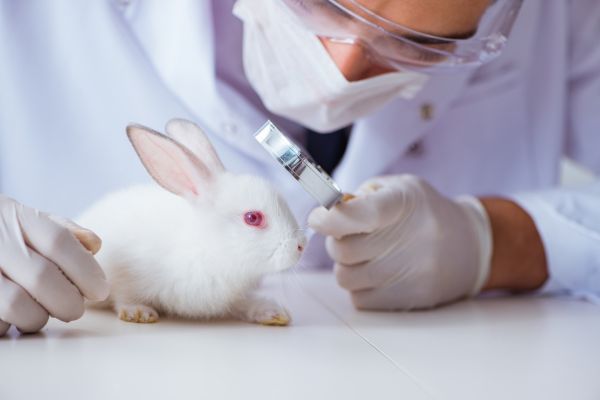
Animal testing sits at the uneasy intersection of scientific ambition and moral responsibility. For decades, animals have been used in laboratories to study disease, examine chemical safety, develop medicines, and test products before they reach the public. Supporters argue that this research has contributed to medical progress and helped scientists understand complex biological systems. Critics respond that causing pain, fear, confinement, or death to animals cannot be justified simply because humans may benefit.
The debate is rarely as simple as choosing between science and compassion. It involves questions about necessity, reliability, regulation, transparency, and the pace at which newer research methods can replace older ones. As technology advances, the central issue is changing. The question is no longer only whether animal testing has played a role in science, but whether it should continue when more human-relevant alternatives are becoming possible.
Why Animals Have Been Used in Research
Animals have traditionally been used because many biological processes are shared across species. Researchers may study how a disease develops, observe the effects of a drug on different organs, or investigate whether a substance causes irritation, toxicity, or birth defects.
Mice and rats are among the most commonly used laboratory animals because they reproduce quickly, are relatively inexpensive to house, and can be bred with particular genetic characteristics. Rabbits, fish, birds, dogs, primates, and other animals may also be used depending on the research question.
Laboratory studies often take place before human clinical trials. The intention is to identify serious risks before an experimental treatment is given to people. In theory, animal research provides an additional layer of protection.
Yet biological similarity has limits. An animal’s reaction to a substance does not always predict how a human body will respond. Differences in metabolism, genetics, immune function, age, environment, and disease development can affect results. This uncertainty is one reason scientists are increasingly exploring methods based directly on human biology.
The Ethical Problem at the Center
The ethical concern surrounding animal testing begins with the fact that animals can experience more than physical injury. Many can feel fear, stress, loneliness, discomfort, and frustration. Laboratory conditions may restrict natural behaviors such as nesting, social interaction, exploration, and movement.
Some procedures involve surgery, forced exposure to chemicals, deliberate infection, food or water restriction, repeated blood collection, or invasive monitoring. Even when pain relief is provided, confinement and handling can still create distress.
Supporters of animal research often use a cost-and-benefit argument. They believe the harm may be acceptable when the expected human benefit is substantial and no suitable alternative exists. Critics challenge this reasoning by asking who has the authority to decide that one species may suffer for another.
There is also a question of consistency. Many societies recognize cruelty toward companion animals as morally unacceptable, yet may permit similar treatment when it takes place in a laboratory. The scientific setting changes the purpose of the act, but it does not automatically remove the animal’s experience.
Medical Research and the Promise of Human Benefit
The strongest defense of animal testing usually comes from medical research. Laboratory animals have been involved in studies of infectious diseases, organ function, surgical techniques, vaccines, and treatments for serious illnesses.
It would be misleading to claim that animal research has contributed nothing to medicine. It would be equally misleading to assume that every animal experiment produces useful knowledge. Many findings fail to translate successfully into human treatments. Some experimental drugs appear promising in animals but later prove ineffective or unsafe in people.
This gap does not necessarily mean that all animal studies are scientifically worthless. It does show that results should not be treated as automatically reliable simply because they came from a living organism.
Better research design, greater transparency, and closer examination of failed studies are essential. Repeating poorly designed experiments wastes resources and causes unnecessary animal suffering. Ethical research requires more than a potentially valuable goal. It also requires evidence that the chosen method is likely to answer the question meaningfully.
Cosmetic and Household Product Testing
Animal testing becomes even more controversial when it is associated with cosmetics, cleaning products, or other non-essential consumer goods.
Many people who accept some animal use in life-saving medical research draw a firm line at testing products designed for appearance or convenience. The moral calculation changes when the expected benefit is a new shade of makeup, a fragrance, or a household formula rather than treatment for a serious disease.
Traditional safety tests may examine skin irritation, eye damage, allergic reactions, or toxicity. These procedures can cause significant suffering, particularly when substances are applied directly to sensitive tissue or repeatedly administered.
Public opposition has encouraged changes in both regulation and product development. It has also pushed companies and researchers to invest in alternative safety methods. Still, laws and requirements differ between countries, and product supply chains can be complicated. A label or public statement may not always explain every stage of ingredient testing.
The broader shift is clear, however. Consumers increasingly expect safety to be demonstrated without causing avoidable harm to animals.
The Principle of Replacement, Reduction, and Refinement
Modern research ethics often refers to three guiding ideas: replacing animals where possible, reducing the number used, and refining procedures to minimize suffering.
Replacement means using non-animal methods whenever they can provide suitable information. Reduction focuses on designing experiments carefully so that fewer animals are needed. Refinement involves improving housing, handling, pain management, and procedures to reduce distress.
These principles have influenced laboratory practice, but their impact depends on how seriously they are applied. If they become little more than administrative language, they cannot protect animals effectively.
True replacement requires funding, validation, training, and regulatory acceptance of new methods. Reduction should not mean using too few subjects to produce meaningful results, because an inconclusive experiment may waste every animal involved. Refinement must consider emotional and behavioral well-being, not only visible physical pain.
The three principles are useful, but they should be seen as a starting point rather than the final answer to the ethical debate.
Human Cells and Laboratory-Grown Tissues
One of the most promising alternatives to animal testing involves human cells and tissues grown under controlled laboratory conditions.
Researchers can study how cells respond to chemicals, infections, or potential medicines without exposing an entire animal. More advanced tissue models can imitate aspects of human skin, eyes, liver, lungs, or other organs.
These systems may provide results that are more directly relevant to people because they use human biological material. They can also allow researchers to examine cellular changes in detail and repeat tests under consistent conditions.
However, a collection of cells cannot yet reproduce every interaction taking place within a complete human body. Blood flow, hormones, immune responses, digestion, and communication between organs can all influence the outcome of a treatment.
For this reason, cell-based methods are not a perfect solution to every research problem. Their value lies in reducing dependence on animals while offering increasingly sophisticated models of human biology.
Organs-on-Chips and Computer-Based Research
Organ-on-chip technology uses small devices containing living human cells arranged to imitate some of the functions of real organs. Fluid may move through tiny channels, creating conditions that resemble blood circulation or tissue movement.
These devices can help researchers study how organs respond to drugs, toxins, inflammation, or disease. Multiple chips may even be connected to explore interactions between different body systems.
Computer models provide another route. Researchers can use existing biological data to predict toxicity, study disease pathways, and simulate the behavior of potential medicines. Artificial intelligence can identify patterns across large datasets that would be difficult to detect through conventional experiments alone.
Neither method eliminates every scientific challenge. Computer predictions depend on the quality of the data used, while organ chips still represent simplified versions of human biology. Even so, they offer something animal models cannot always provide: a research platform built around human responses from the beginning.
Human Volunteers and Carefully Designed Studies
Some research can be conducted with human participants using methods that involve minimal risk.
Microdosing studies use extremely small amounts of an experimental drug to examine how it moves through the human body. Advanced imaging can allow researchers to observe organs, brain activity, or disease progression without invasive procedures. Population studies can reveal links between lifestyle, environment, genetics, and health outcomes.
Researchers may also work with donated human tissue, surgical samples, medical records, and patient-derived cells. These approaches can produce insights grounded directly in human experience.
Human research must be carefully regulated, and informed consent is essential. Ethical problems do not disappear simply because animals are not involved. Privacy, exploitation, risk, and unequal access to research benefits must all be considered.
Still, responsibly designed human-based studies can reduce uncertainty caused by differences between species.
Regulation and the Need for Transparency
Animal research is regulated in many places, but the strength of oversight varies. Ethical review committees may assess whether an experiment is necessary, whether the number of animals is justified, and whether pain will be minimized.
Regulation is only effective when institutions are transparent and rules are enforced consistently. Closed systems make it difficult for the public to know how animals are used, what level of suffering is permitted, or whether alternative methods were seriously considered.
Greater openness can also improve science. Publishing negative or unsuccessful results may prevent other laboratories from repeating the same work. Sharing data can reduce duplication and encourage researchers to design better studies.
Transparency does not resolve every ethical disagreement, but secrecy weakens public trust. When animals are used in the name of social benefit, society has a legitimate interest in understanding how and why that decision was made.
Rethinking the Future of Animal Testing
The future is unlikely to be shaped by one sudden decision to end all animal research. Change is more likely to come through a gradual shift toward methods that are more ethical, more precise, and more relevant to human health.
That transition requires investment. Scientists need access to advanced technologies, regulators must accept validated alternatives, and educational institutions must train researchers to use new models. Financial and professional incentives also matter. Laboratories are less likely to abandon familiar methods if funding systems continue to reward them.
Ethical concern and scientific improvement do not have to pull in opposite directions. In many cases, the search for alternatives can produce better research precisely because it moves closer to human biology.
A More Responsible Path Forward
Animal testing raises difficult questions because it connects genuine hopes for scientific progress with the suffering of living creatures. Its history cannot be reduced to either heroic medical discovery or meaningless cruelty. Both the benefits and the failures deserve honest examination.
The most responsible path is not to defend every existing practice simply because it is familiar. Nor is it enough to demand change without supporting the scientific work needed to make that change possible.
As human-based research methods improve, the justification for many animal experiments becomes harder to maintain. The goal should be clear: replace animals wherever possible, reduce their use when replacement is not yet practical, and treat the remaining ethical burden with seriousness rather than convenience.
Progress in science should not be measured only by what can be discovered. It should also be measured by how thoughtfully that knowledge is pursued.